
Exercises by muscle
Forearm exercises
To strengthen your forearms, make them grip, squeeze and hold the wrist steady under load. In Logic Workout they do all three: you squeeze a Logic ball between your hands while turning your wrists, and you lean on your forearm on a ball that rolls and springs back about ten times a second. Grip strength comes with it.
Free for 14 days
The Reactive Falling Effect
Why Logic works your forearms better
Every fiber, near failure. The Logic ball rolls, deforms and springs back about ten times a second, close to human reaction time. Heavy weights get a few prime movers near failure in 5 reps. On the Logic ball, at the right level, 5 reps is just as hard, for your forearms and for every small stabilizer around them: 17 times the reactive demand of weight training, in our measurements. That's how 2h of Logic beats 6h of weights. And light loads taken to failure build as much muscle as heavy ones (Schoenfeld et al., 2017, 21 studies).
Ready for real life. A bar moves on a track you planned. Life doesn't: a missed step, a tackle, a landing on uneven ground. On the ball, reacting is the exercise: in a fraction of a second, with the whole chain, in the moment you don't see coming, the one a fixed track never trains.
Reactive demand: Apple Watch wrist accelerometer, jerk and Welch power spectral density, 3 axes, 2–12 Hz, our measurements. Our proxy for how many muscle fibers have to work, not a count of them.


Forearms
What your forearms do
The forearm holds about twenty muscles. Those on the palm side bend the wrist and the fingers, which is your grip; those on the back open the hand and pull the wrist back. Others turn the palm up and down. Every pull, carry, throw and racket swing goes through them.
Grip strength is often used as a quick measure of overall strength, and it drops with age when it isn't trained.
What the research says. In 139,691 adults across 17 countries, every 5 kg less grip strength went with a 16% rise in the risk of death from any cause, a better predictor than blood pressure (Leong et al., Lancet, 2015).
Logic Workout
How Logic Workout trains them
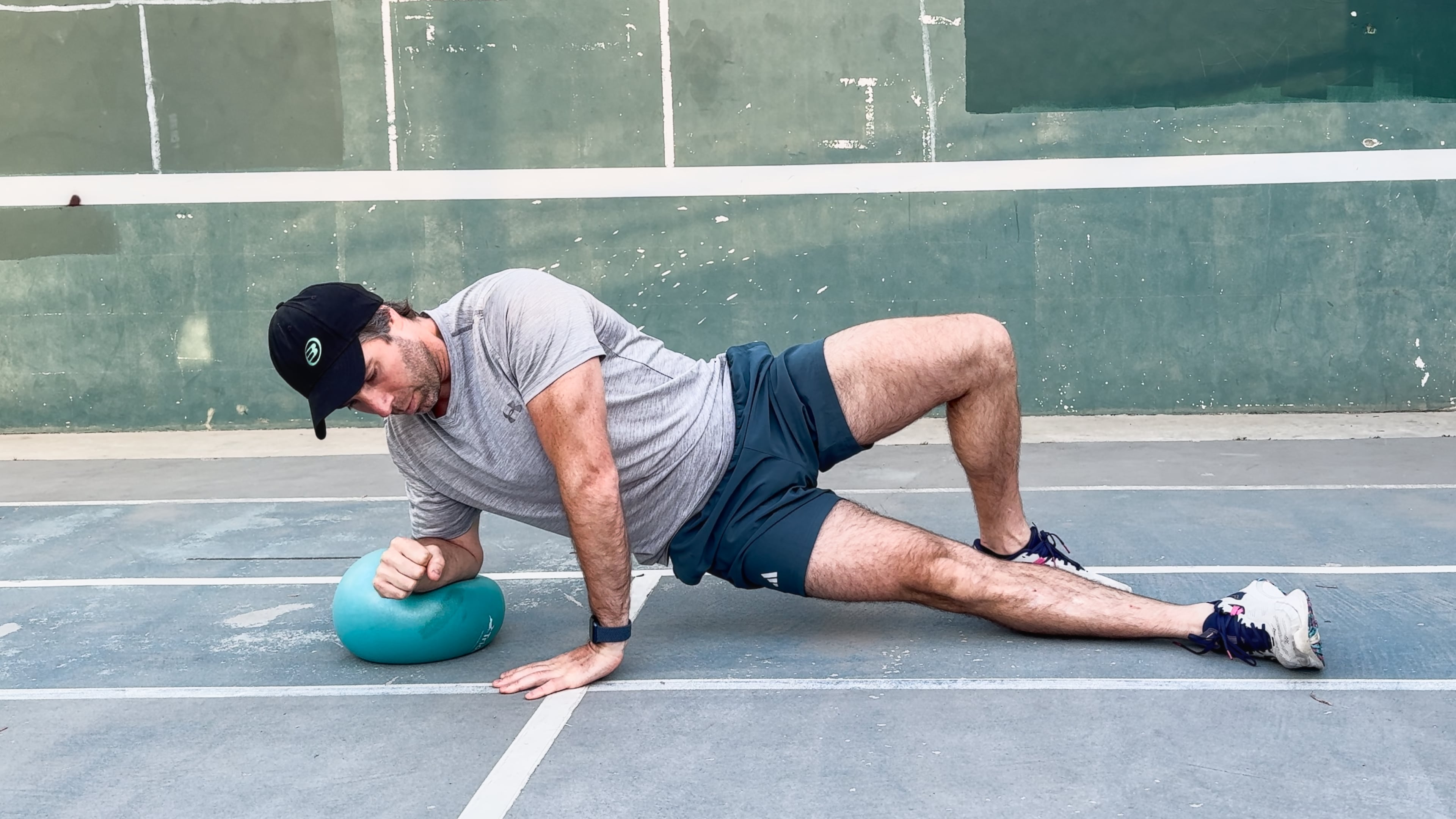
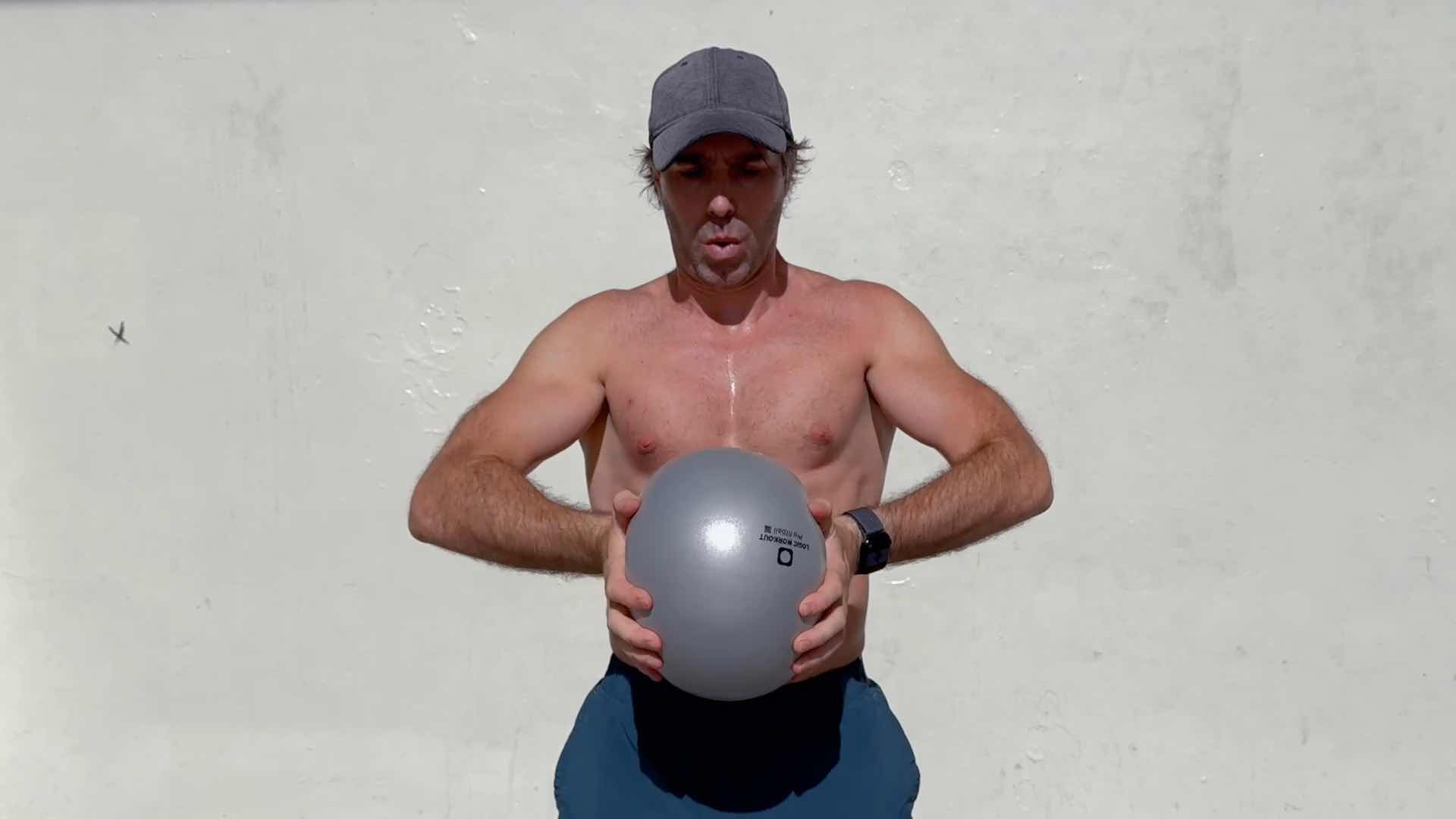
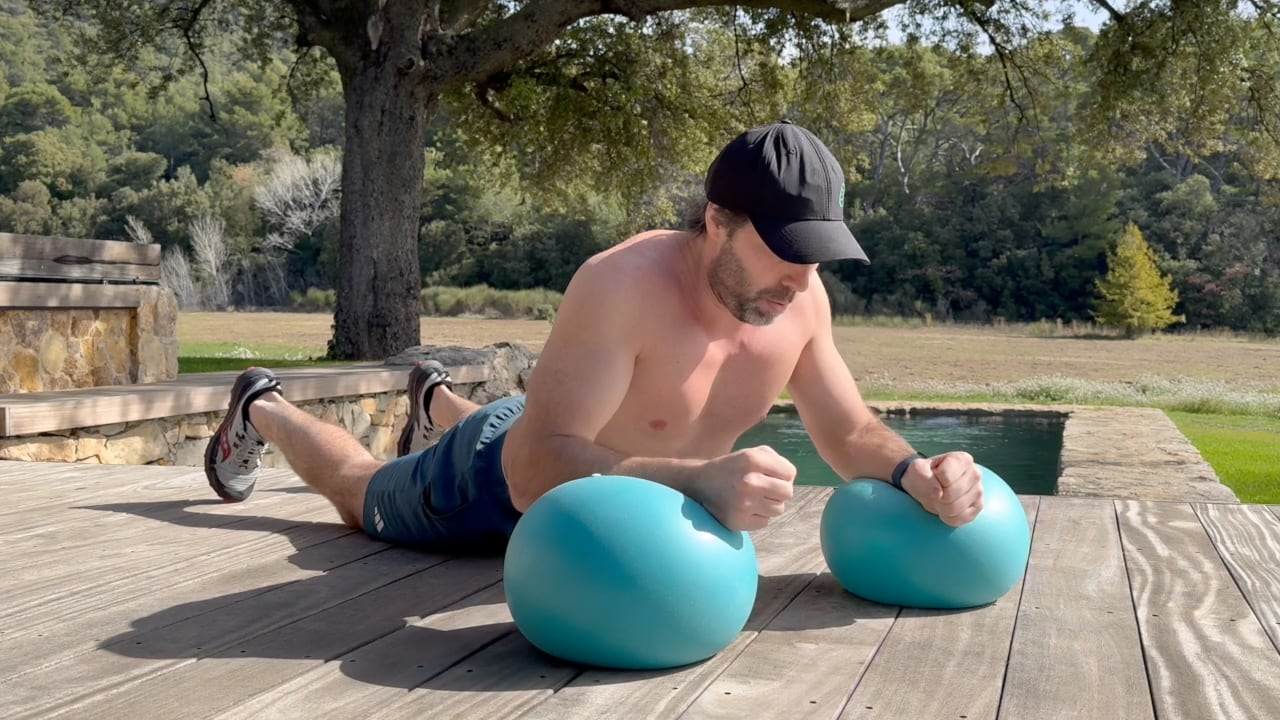
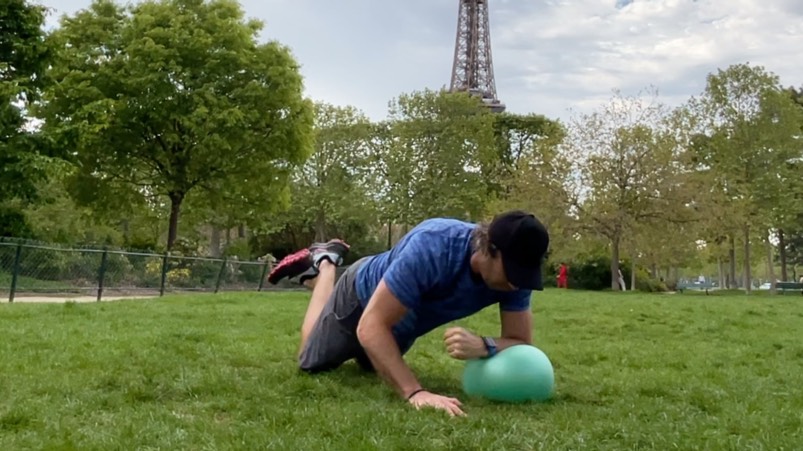
The Squeeze fists rotating compresses the ball between your open hands while the wrists and arms turn up and down. In the side plank arm on the Logic ball and the chest opener, the forearm lies on the ball and carries your weight while it rolls. The renegade ball row rolls the ball from the forearm out to the fist and back. The forearms grip and steady, the way they do in every lift.
In our first study, Dan, 40, had stopped training for a year with golfer's elbow. On about 2 hours of Logic a week, he reported the pain gone at two months, lost 10 kg of fat while building muscle, and ended stronger than before the injury.
Coming back from pain or an injury? The app's Recovery tab has lighter versions for the forearms, against a wall or on a chair: Light negative chin-ups and Light negative pull-ups. Users report their pain resolved even when they didn't come for it. If it hurts today, have it checked by a physio or doctor first.
In the app
Exercises that work your forearms
Each one works your forearms and more: your forearms in colour, the other muscles it works in a lighter tint. How to do them is in the app: five levels with a video for each, and the Logic Effort Score on Apple Watch.
One Logic ball
Side plank arm on the Logic ball
Also works the obliques, glutes, shoulders and inner thighs.
One Logic ball
Squeeze fists rotating
Also works the biceps and triceps.
One Logic ball
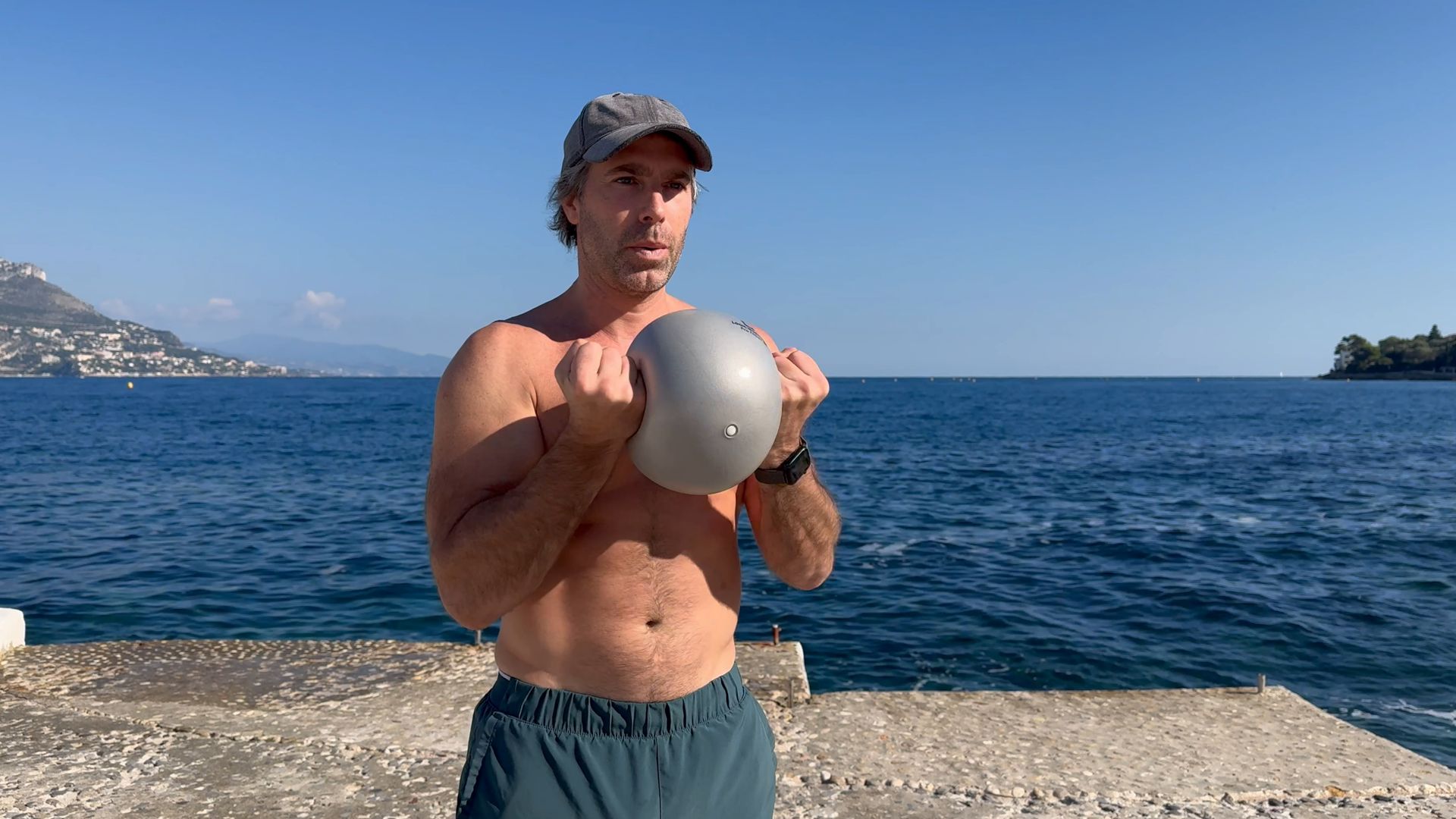
Squeeze biceps curls
Also works the biceps.
Two Logic balls
Chest opener
Also works the chest, shoulders and upper abs.
One Logic ball
Renegade ball row
Also works the wrists, triceps and shoulders.
Common questions
How do you build grip strength at home?
Squeeze something that pushes back, hard, and hold it. A Logic ball is a good one: compressed between the hands it springs back and shakes, so the grip has to keep correcting. The Squeeze exercises in the app do exactly that.
Do other exercises train the forearms?
In Logic Workout, constantly. Every exercise on the fists or the forearms, push-ups, negative pull-ups, planks, makes them grip and steady the arm. The body map on each exercise shows it.
How long does a forearm workout take?
In the app's Workouts tab, under Focused strength, tap Forearms: short workouts of a pump and two exercises, about 5 minutes a set. Full workouts run from 10 to 40 minutes, and the whole program is 2 hours a week.
Exercises by muscle
Train the whole chain
Train less. Get stronger. Recover.
2h a week outperforms 6h of gym training.
We measured it.
Gym-goers and athletes who switched or swapped 2 hours of training to Logic: at least +15% on their PRs in one month, measured as added weight or added reps. Established with 1000+ people over 10 years.
Note your max today. Swap 2 hours a week for Logic. Check it in a month.
Free for 14 days
